

Volume 114
Published on November 2025Volume title: Proceedings of the 4th International Conference on International Law and Legal Policy
Refugee children constitute one of the most educationally marginalized populations worldwide. Language acquisition is a cornerstone for their integration, psychosocial well-being, and long-term opportunities, yet conventional humanitarian interventions often fail to provide sustained, high-quality, and culturally relevant language education. Advances in artificial intelligence (AI) present new opportunities to deliver personalized, adaptive, and scalable learning experiences. However, the integration of AI into refugee education raises complex challenges concerning cultural inclusivity, ethical responsibility, and learner motivation. This paper addresses the central question: How can AI-powered language learning tools be designed to intrinsically motivate refugee children while respecting their cultural and linguistic diversity? Drawing on self-determination theory (SDT), co-design methodologies, and culturally responsive pedagogy, this study synthesizes theoretical insights with case analyses of initiatives such as Ahlan SimSim and Kolibri. The findings suggest that intrinsic motivation is cultivated when AI tools support children’s autonomy, competence, and relatedness while embedding culturally resonant content. The paper argues for participatory co-design with refugee communities, hybrid human–AI facilitation models, and robust ethical safeguards to ensure that AI systems empower rather than marginalize. Ultimately, responsible innovation requires balancing technological potential with socio-cultural sensitivity, offering a framework for equitable AI deployment in refugee education.

 View pdf


With the development of social policy in different areas, the existence of childhood education and related programs has been broadly recognized as one of the key factors to support and benefit children’s development. Indeed, many developed nations have implemented preschool programs at different levels. This paper mainly examines Head Start as a social policy in compensatory education for children from low socioeconomic status backgrounds. Based on current research and policy analyses, it evaluates the program’s theoretical foundations, implementation approaches, and outcomes through social policy management principles. Since its inception in 1965, Head Start has served as America’s flagship early childhood intervention program, providing comprehensive services to millions of disadvantaged children. Despite significant federal investment spanning nearly six decades, funding limitations, quality inconsistencies, and evaluation complexities continue to influence the program’s impact. This analysis concludes that while Head Start demonstrates significant potential for improving early childhood outcomes, its overall effectiveness is constrained by chronic funding instability and structural implementation challenges—highlighting the need for sustainable investment and consistent quality assurance.
View pdf
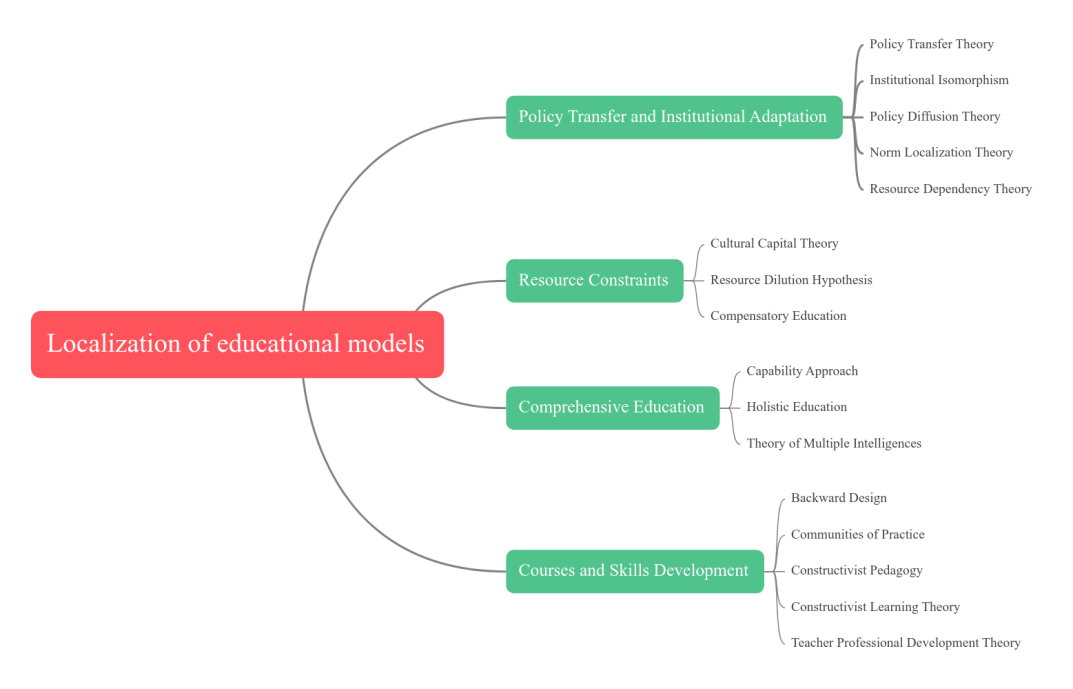
Educational inequality in Henan Province presents severe challenges under its current educational model. Although the province is home to the largest population of primary and secondary students nationwide, it struggles with low rates of higher education enrollment and a system dominated by exam-oriented approaches that overlook holistic student development. This study compares Henan’s situation with Beijing’s more comprehensive educational framework, examining disparities in resources, economic conditions, and regional mindsets. It identifies fundamental barriers that prevent direct policy transfer, including deeply rooted differences in how resources are distributed, institutional motivations, and local cultural settings. Using critical policy ethnography, the research draws on secondary data and online interviews to uncover structural obstacles and possibilities for local adaptation. The findings highlight the need to make use of Henan’s distinctive assets through reforms in curriculum design, evaluation methods, and resource distribution. This paper proposes a localized educational approach that integrates core principles of all-round development while respecting regional limitations, offering a practical route for reducing educational gaps and supporting students’ comprehensive growth.
View pdf
Depression is a complex disorder triggered by biological, neurological, social, and psychological factors. Traditional treatments such as pharmacotherapy (e.g., SSRIs) and psychotherapy (e.g., CBT) face limitations including side effects, resistance, and reliance on verbal expression. Music therapy, as a non-pharmacological intervention, offers novel potential by modulating brain function through soundwave vibrations and emotional resonance. This paper proposes integrating musical monodrama, a psychodrama technique, with the empty chair method from Gestalt therapy to create a multidimensional intervention for depression. The study addresses three questions: (1) how to externalize emotional conflicts through musical role-dialogue; (2) the mechanisms in improving cognition and behavior; and (3) clinical feasibility. The three-phase design includes pre-treatment assessment, four-step intervention, and continuity interventions. Advantages include bypassing defenses, externalizing self-aggressive emotions, and forming a therapeutic chain from catharsis to cognitive-behavioral change. The approach also reduces stigma in East Asian contexts. Future research should validate neural mechanisms and explore digital personalization.
View pdf
Against the backdrop of China’s “Dual Circulation” development strategy and the ongoing marketization of higher education, high tuition fees in private colleges present a symbiotic paradox for educational equity, as they risk exacerbating social stratification while simultaneously expanding the ways in which equity can be realized. This study employs literature review and comparative case analysis to examine the formation mechanisms of high tuition fees from the perspectives of institutional supply and demand stratification, and their dual impact on equity. Building on this analysis, the study proposes an efficiency-compatible equity framework that reconciles equity with institutional and market efficiency. It further recommends establishing a dynamic, data-driven financial aid system leveraging artificial intelligence to better identify and support economically disadvantaged students, creating a regional “APEC Credit Bank” to connect private college courses, faculty, and the international education market, and reforming the education supply structure according to industry demand to foster disciplines in strategic emerging sectors such as artificial intelligence, healthcare, and renewable energy. This research provides a Chinese-informed theoretical and practical model for the coordinated governance of educational equity and market mechanisms on a global scale.
View pdf
This article looks at Eleanor Roosevelt's saying, "no one can make you feel inferior without your consent," and how it might be used in many social, developmental, and psychological situations. The argument stresses how autonomy and agency can help people reject outside judgments, which could lead to better performance. It does this by using principles like internal locus of control, resilience, unconditional positive regard, and the strategic acceptance of inferiority. These elements show when Roosevelt's claim is true. It also talks about some basic limits on people's freedom. Cultural frameworks that are deeply ingrained, bad things that happened in childhood, and natural personality traits can all hurt someone's sense of self without meaning to. According to empirical studies on trauma, personality traits, and social rank theory, these psychological and institutional restrictions diminish agency. To restore autonomy, the research underscores the imperative for therapeutic approaches, such as Adlerian, psychodynamic, and cognitive training procedures, that enhance self-efficacy, recontextualize detrimental cognitive patterns, and modify maladaptive emotional responses. The study posits that Roosevelt's assertion is conditionally valid: individuals may dismiss emotions of inferiority if they possess the psychological resources and resilience; but, structural and personal constraints often supersede individual sovereignty. Roosevelt's higher emphasis on self-determination and empowerment aligns with therapeutic approaches that facilitate the reclamation of personal agency.
View pdf
In this work synthesizes research from 2000 to 2025 to explore how inclusive leadership implemented by secondary school leaders in the UK influences educational equity for students with special educational needs (SEN). Drawing on a qualitative systematic review methodology, the study focuses on transformational leadership as a key theoretical framework. Findings indicate that inclusive leadership advances equity through three interconnected mechanisms: articulating an equity-oriented vision, fostering teacher professional development, and establishing systematic processes for identification, intervention, and evaluation of SEN support. These mechanisms help reshape school culture, strengthen teacher-student relationships, and ensure consistent and sustainable inclusive practices. The study concludes with practical recommendations for school leaders and policymakers, emphasizing the integration of instructional and inclusive competencies, progress monitoring, and evidence-based strategies to enhance educational experiences for students with SEN.
View pdf
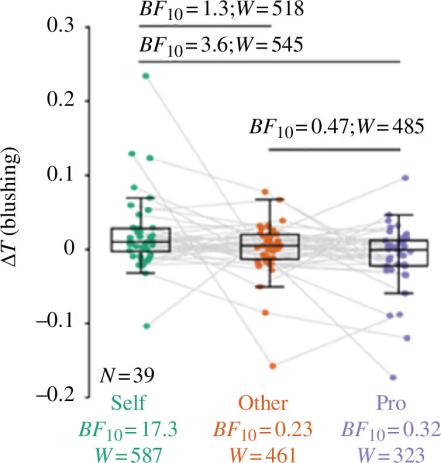
The topic, followed by blushing, is related to higher-order social cognition is a problem. This is a worthy topic to research. To uncover the neural activity linked to blushing, while also shedding light on the mental processes that underpin this physiological response and the mechanisms that contribute to the formation of self-awareness. This study explored the neural basis of blushing. Participants viewed pre-recorded videos of themselves singing karaoke inside an MRI scanner, while videos of others served as controls. Cheek temperature, used as a physiological indicator of blushing, and brain activity were recorded concurrently through fMRI. Sixty-three individuals were recruited, and after excluding data errors, 49 valid datasets remained, including 40 participants who completed MRI scanning. Each participant watched both their own and others’ singing performances, enabling direct comparison across conditions. Results revealed that facial flushing was most pronounced when participants observed their own recordings. This condition was associated with stronger activation in the cerebellar lobule V, left paracentral lobule, and early visual cortex, indicating faster sensory processing. Overall, the findings suggest a clear link between blushing and the engagement of neural systems involved in emotion regulation. Moreover, the results imply that the occurrence of blushing does not necessarily depend on complex social-cognitive mechanisms, but may instead arise from more fundamental sensorimotor and affective processes.
View pdf
From the perspective of the restructuring of global industrial chains, this paper analyzes the relationship between China and Mexico in nearshoring from the two dimensions of competition and cooperation, combining trade data and corporate cases from 2018 to 2025. The study shows that the competition between China and Mexico is essentially a re-game of the division of labor in the global industrial chain, while the cooperation potential stems from the complementarity of their industrial structures and the common demand for technological upgrading. Based on this, this paper suggests that the two sides should accelerate free trade agreement negotiations, jointly build a stable and efficient industrial supply chain system, and promote the realization of "win-win cooperation" between China and Mexico. This study not only provides a clear analytical framework for clarifying the nearshoring relationship between China and Mexico but also aims to offer references for developing countries to explore new win-win cooperation models amid the adjustment of global industrial chains.
View pdf
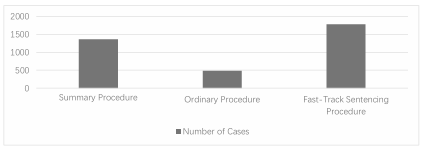
The system of leniency for guilty pleas and acceptance of punishment is conducive to promoting the rational allocation of judicial resources, thereby advancing the high-quality development of criminal justice work. However, current academic research mainly focuses on the prosecution review and trial stages, while studies on the application of this system at the investigation stage remain inadequate. Based on an empirical analysis of 3617 judicial documents from 2019 to 2024, this paper concludes that the application of the system of leniency for guilty pleas and acceptance of punishment at the investigation stage faces three dilemmas: a "high" pre-litigation detention rate, "unmanifested" hierarchical sentencing leniency, and the transformation of duty lawyers into "witnesses". Therefore, it is urgent to promote the application of non-custodial measures in cases involving guilty pleas and acceptance of punishment, establish a stepwise sentencing leniency mechanism, and give full play to the role of duty lawyers. These measures aim to improve and standardize the application of the system of leniency for guilty pleas and acceptance of punishment at the investigation stage.
View pdf