

Volume 116
Published on December 2025Volume title: Proceeding of ICSPHS 2026 Symposium: Urban Industrial Innovation and Resilience-oriented Regional Transformation
Creation of the Gods is one of the most significant deity and demonism novels in China. While Ne Zha is an important character in the novel, he has a rich and complete storyline and strong dramatic tension, making him an inexhaustible source for subsequent film and television adaptations. This article focuses on the character of Ne Zha and the related film and television adaptations of his character in modern times. By using the comparative analysis method, the reasons for the changes in its image characteristics over different periods were studied. It mainly encompasses the evolution of mainstream social ideas, the change of the audience's role, and the updates in scientific and technological levels, all of which exert various influences. Based on the above analysis, this article puts forward some suggestions for the future film adaptation of Ne Zha: keep updating the targets of resistance in line with the times, build a grand worldview rather than merely praising individual heroism. By integrating new technologies with new Chinese-style aesthetics, the classic IP of Ne Zha is able to continuously maintain and even enhance its vitality.

 View pdf


As China's first biographical general history, Records of the Grand Historian features character languages that embody both historical and literary values. However, existing studies have paid insufficient attention to the comparative analysis of the languages used by figures from the Warring States Period and the early Han Dynasty it. Therefore, this study takes the Four Noblemen of the Warring States Period and Xiao He, Fan Kuai, and Zhou Bo from the early Han Dynasty in Records of the Grand Historian as the research objects. It sorts out the linguistic characteristics of these characters based on vocabulary, sentence patterns, and styles, and conducts a comparative analysis by combining their personalities with the historical backgrounds of the Warring States Period and the early Han Dynasty, to explore the differences in their languages and the causes behind them. The language of the Four Noblemen of the Warring States Period revolves around their noble status and political demands, embodying both utilitarianism and strategic thinking, while also containing the contradiction between modesty and arrogance. In contrast, the language of figures in the early Han Dynasty was consistent with their own role positioning. Due to the strengthening of monarchical centralization and the governance demand for recuperation and rest, their language showed characteristics of being cautious and balanced, or simple. The differences in characters' language are not only the external projection of their personality traits, but also the linguistic mirror of the styles of different eras.
View pdf
As a Tang Dynasty imperial palace garden site,Xi'an Xingqing Palace Park possesses both profound historical and cultural significance while serving as a vital urban leisure and cultural tourism destination.This study examines the park's historical context and architectural features,followed by an evaluation of its current environmental conditions.Key issues identified include excessive vegetation density,insufficient natural lighting in shaded pathways,limited recreational facilities,and monotonous cultural exhibition formats.To address these challenges,the following improvement measures are proposed:First,adjusting tree heights and shrub density to enhance openness and lighting conditions;Second,adding benches,sun umbrellas,and leisure light poles to improve visitor comfort;Third,installing signage related to the Westward Migration Spirit to enrich cultural heritage;Fourth,strengthening cultural infrastructure development to enhance cultural ambiance.The research concludes that these measures will not only improve living environment quality but also facilitate the integration of cultural relics with modern lifestyles,providing valuable references for the development of other historical heritage parks.
View pdf
“Li Ling Tower” appears as a literary imagery in a great number of Qing dynasty poems, but there is still a lack of systematic academic research on this topic. By using materials from the Database of Chinese Classics Ancient Books and adopting a mixed method of documentary research and textual analysis, this study explores Qing dynasty poems that include the “Li Ling Tower” imagery. It first traces the historical origins and literary traditions of this imagery, and then classifies the poems into four main thematic types: frontier travel poetry, farewell and remembrance poetry, epic and nostalgic poetry, and painting poetry. The research shows that the “Li Ling Tower” imagery is not only a typical geographical symbol of frontier, but also reflects poets’ contradictory views on the historical figure Li Ling, their strong longing for hometowns, and deep thoughts on the rise and fall of dynasties in history. The diverse writing strategies used in relevant poems combine geographical, emotional and historical dimensions, which makes these poems an important way to understand the spiritual world and historical awareness of Qing dynasty literati.
View pdf
Thinking ability is a core literacy that Chinese students should possess. Upper primary grade is a crucial period for the development of abstract thinking. Enhancing the speculative reading teaching for upper primary grades is one of the important tasks of Chinese reading teaching. To further advance speculative reading teaching within the Chinese educational context, the study explores the strategy of integrating Philosophy for Children Hawaii into speculative reading teaching. It firstly illustrates the feasibility of the integration of both from three perspectives, which are the resource provision, alignment with learning objectives, and improvement of the learning process. Based on the theory of p4cHI and the Compulsory Education Chinese Curriculum Standards (2022 Edition), the study takes Tian Ji’s Horse Racing, a text from the fifth-grade volume 2 textbook published by the Ministry of Education of the People's Republic of China, as a case to propose three strategies. These strategies are based on basic procedures of practicing p4cHI, including facilitating the local adjustment of the basic procedures of practicing p4cHI, providing diverse learning tools and materials, and strengthening evaluation within the process. Therefore, this study provides useful references for the practice of speculative reading Teaching and facilitates the exploration of the educational practice of Philosophy for Children Hawaii in the context of China.
View pdf
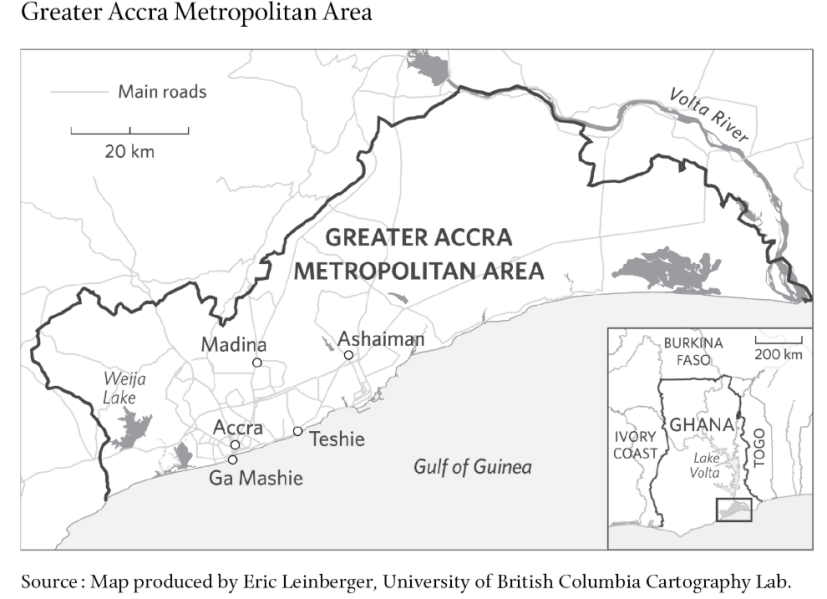
This paper examines inequities in urban water governance in the Greater Accra Region of Ghana to identify patterns where institutional fragmentation and spatial marginalization intersect, creating unequal access to affordable and safe water. Using a multi-level analytical framework, the study explores the micro-level dynamics of “de-publicization,” in which water is commodified rather than recognized as a citizen’s entitlement; the meso-level challenges of regulatory duplication and blurred accountability among central institutions; and the macro-level tensions between global efficiency-oriented frameworks and local implementation capacities. Through an analysis of policy documents, institutional data, and related research, the study finds that unequal access to water resources stems from exclusion based on citizenship status, inadequate empowerment of local governance, and an external aid logic centered on cost recovery. It proposes integrated reforms that bridge national, regional, and global governance levels to advance progress toward Sustainable Development Goal 6 in a socially inclusive manner.
View pdf